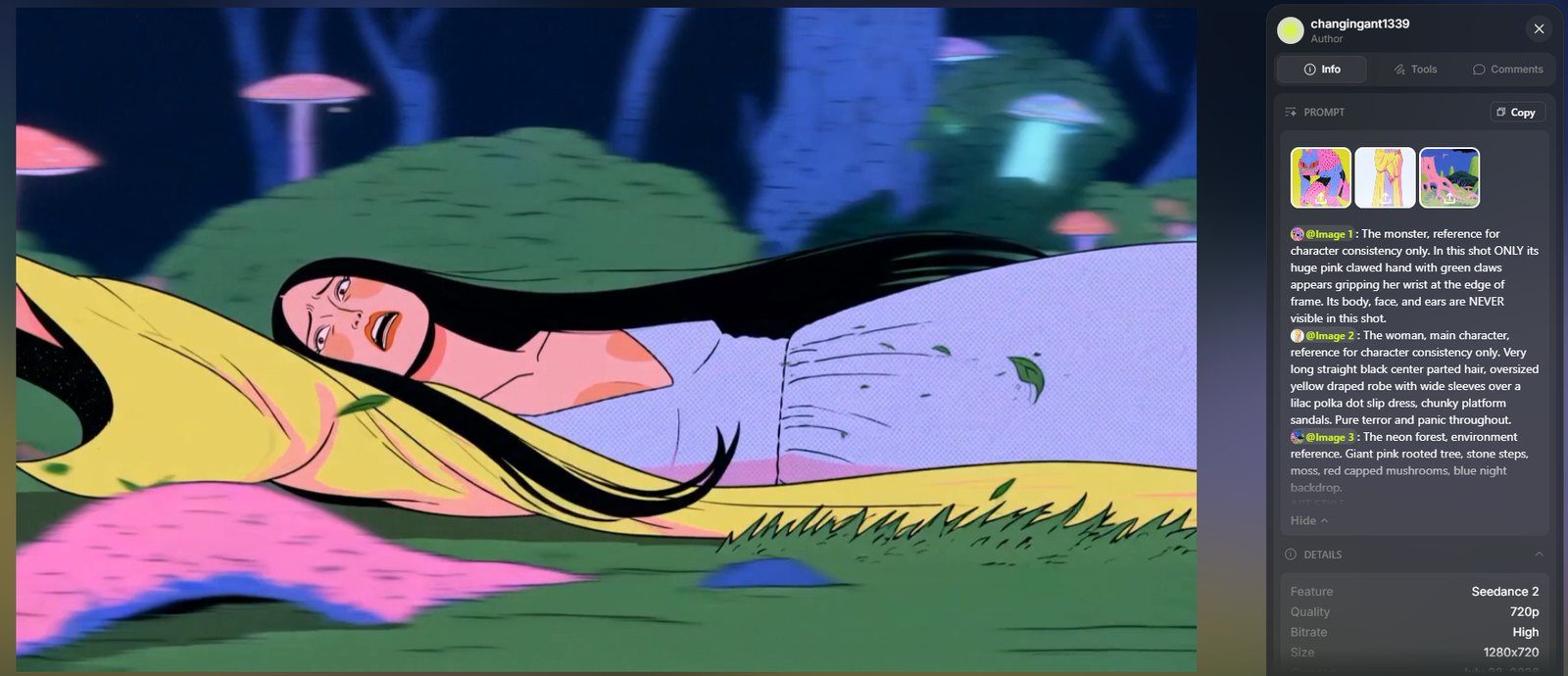
A woman is dragged screaming through a neon forest by something enormous and profoundly bored. A barbarian arrives to rescue her, announces himself, and performs a small dance. She watches all of it, and politely declines.
Everyone knows how a rescue story ends, so the only job is to not deliver it. The girl doesn't need saving, the monster isn't a monster, and the hero's real obstacle is himself.
Working Backwards
The characters existed first. The story was reverse engineered out of them.
This began as a style test: new animation look, keep it punchy, nothing about plot.
So the characters came first and the story was reverse engineered out of them. A barbarian with a living head on his kilt already tells you he needs an audience. A bored monster dragging someone by the wrist tells you this is Tuesday. Put them in a clearing and the scene writes itself.
Character Design in Midjourney
Four characters and one location, all designed before the story existed.
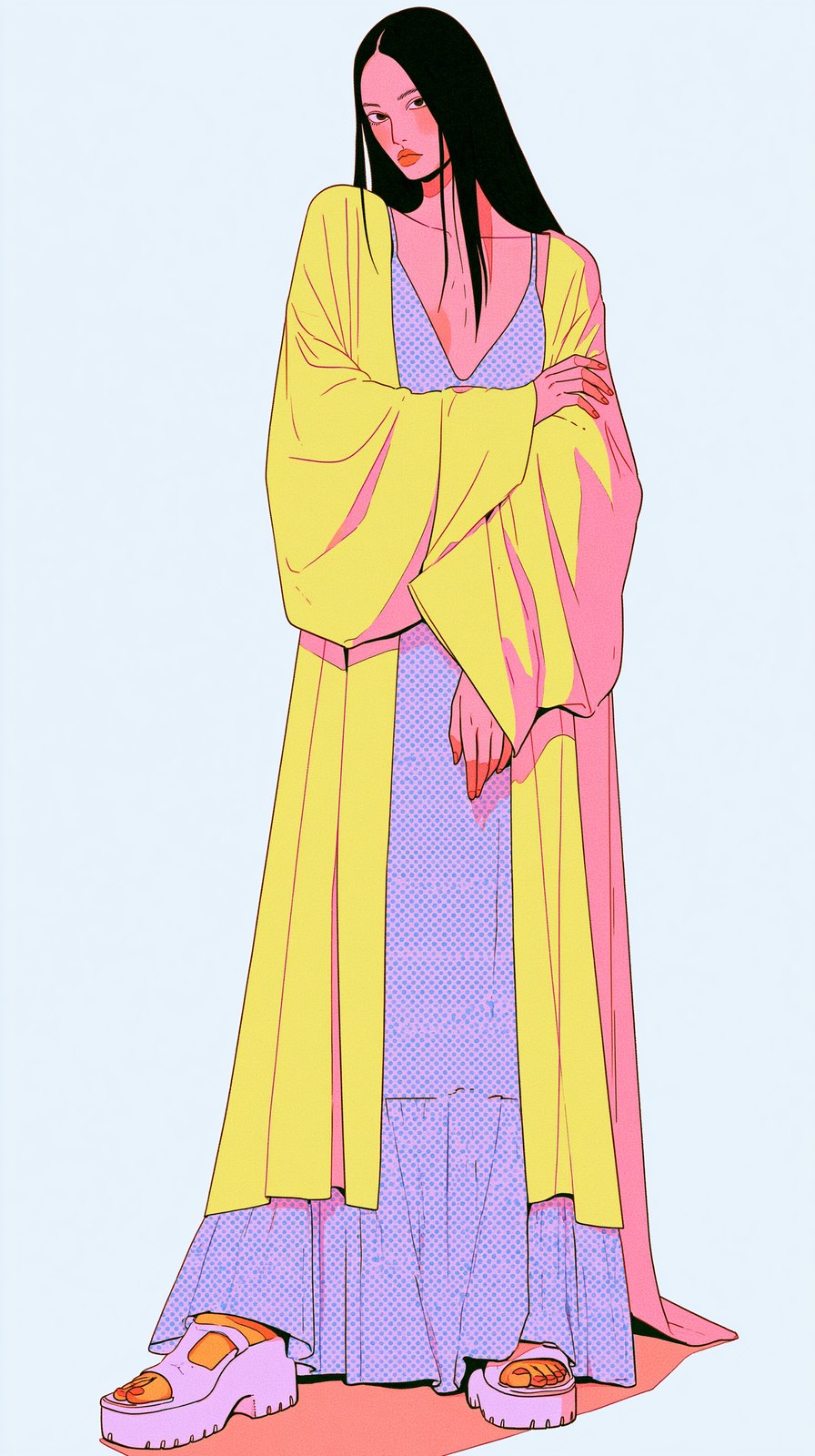
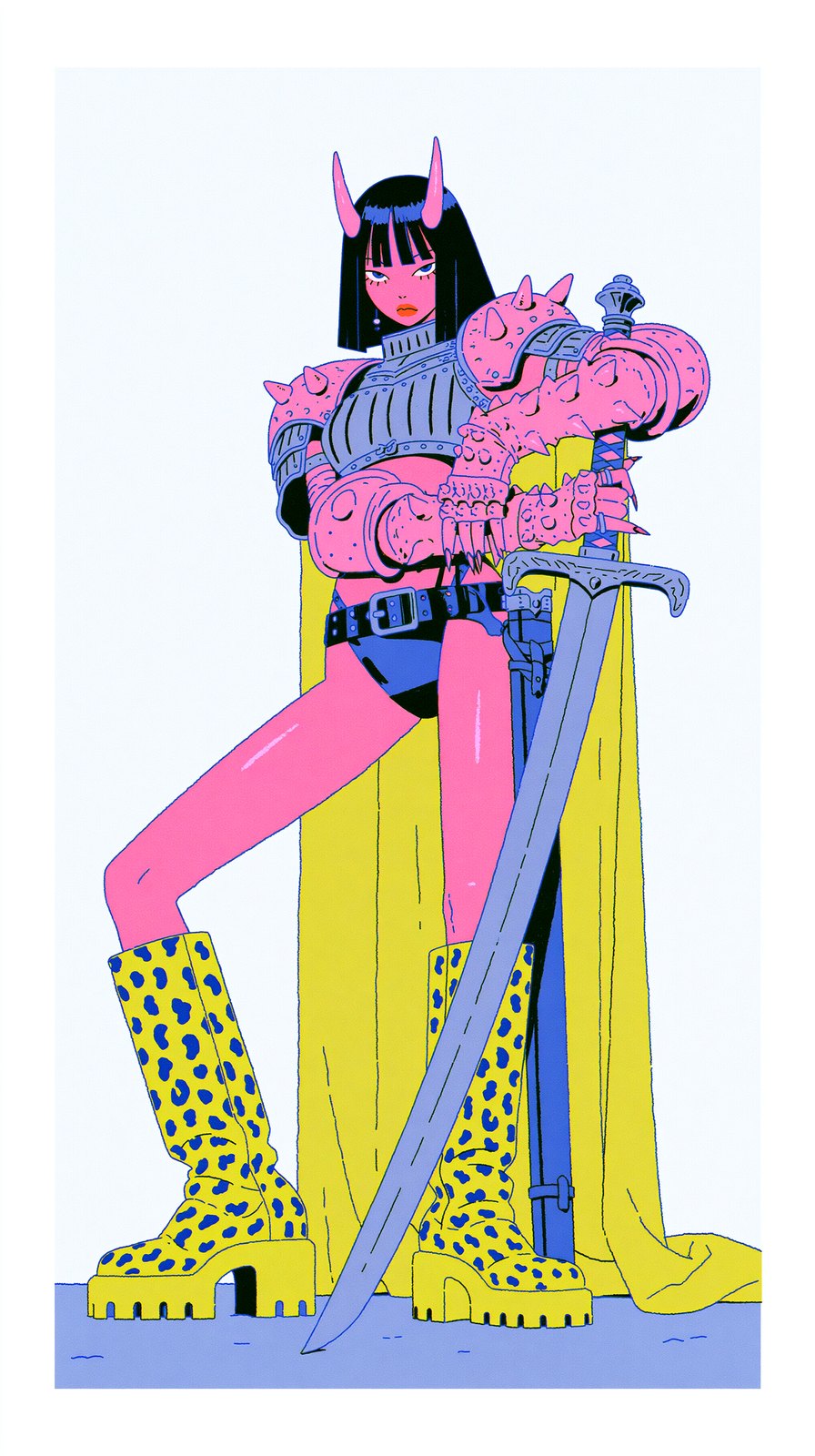
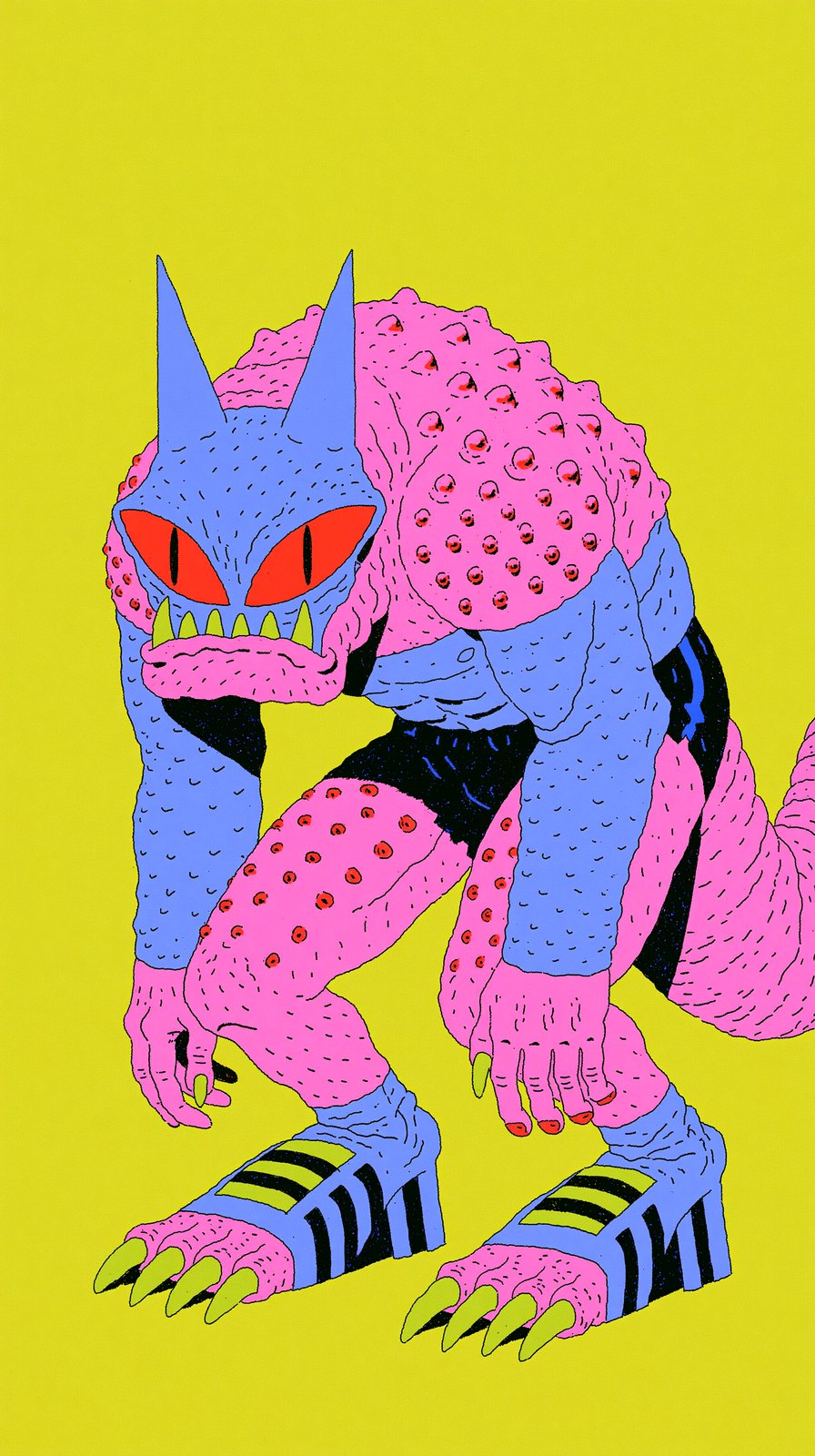
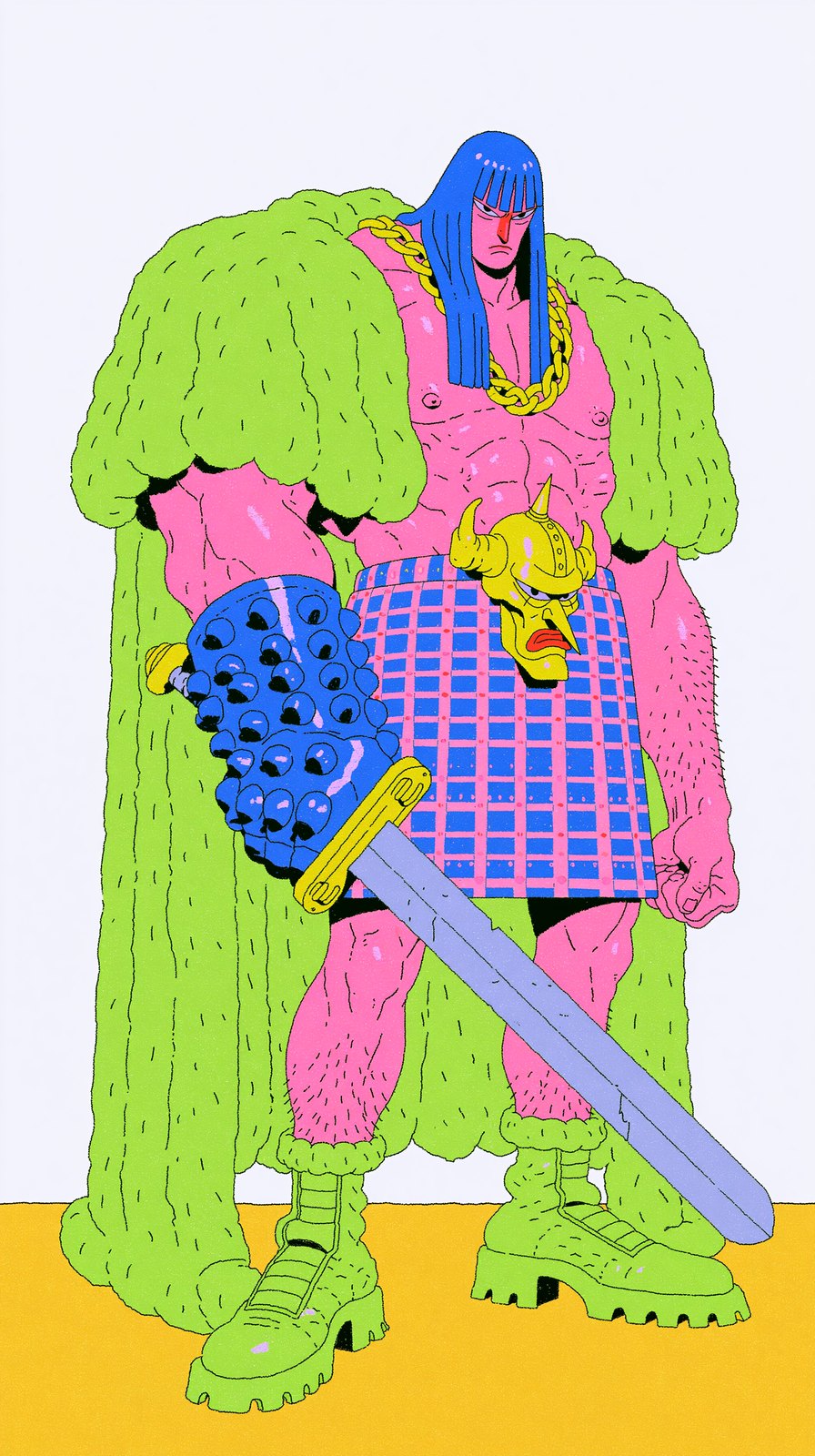
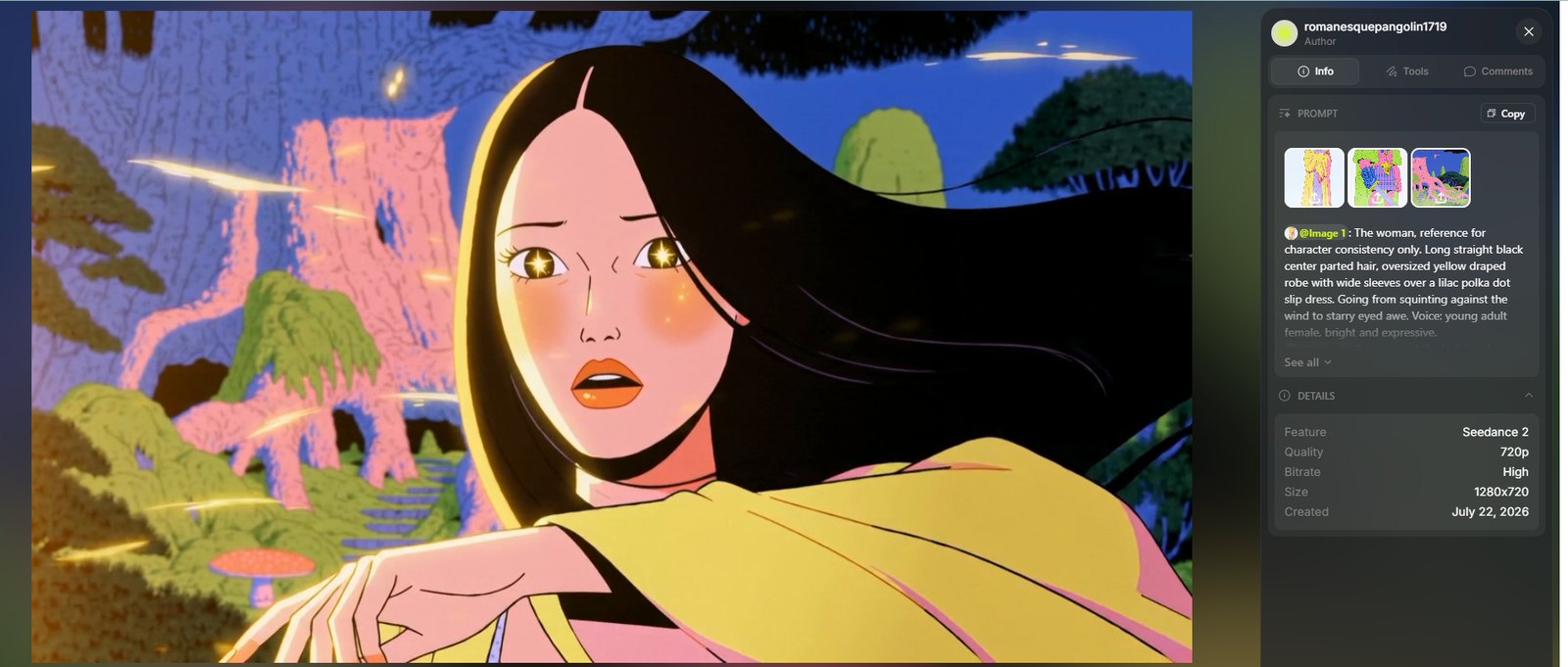
The Woman
The one everyone assumes is the damsel.
The Warrior
The monster's true form, built as her own character, in the same look as the woman so they belong in the same frame.
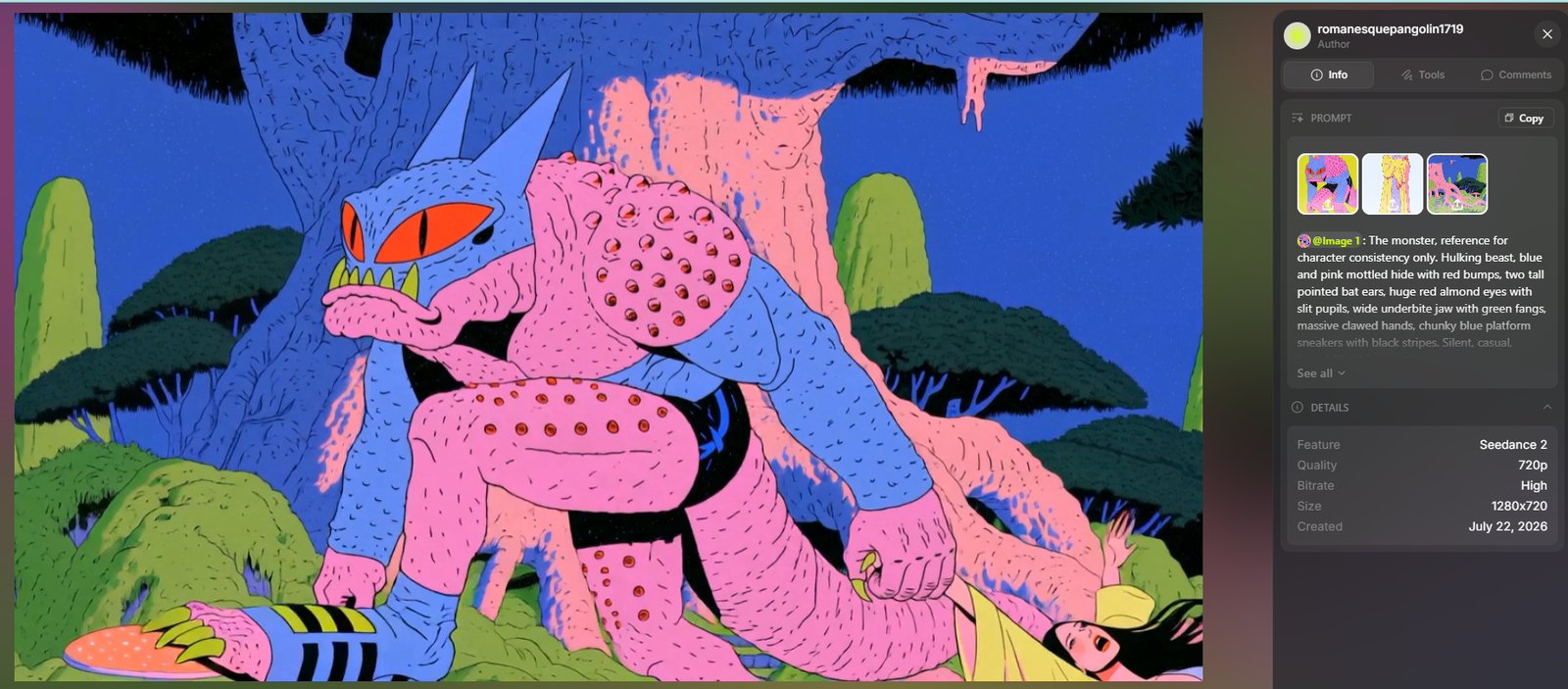
The Monster
The platform sneakers were not asked for.
Bragnar and the Belt Head
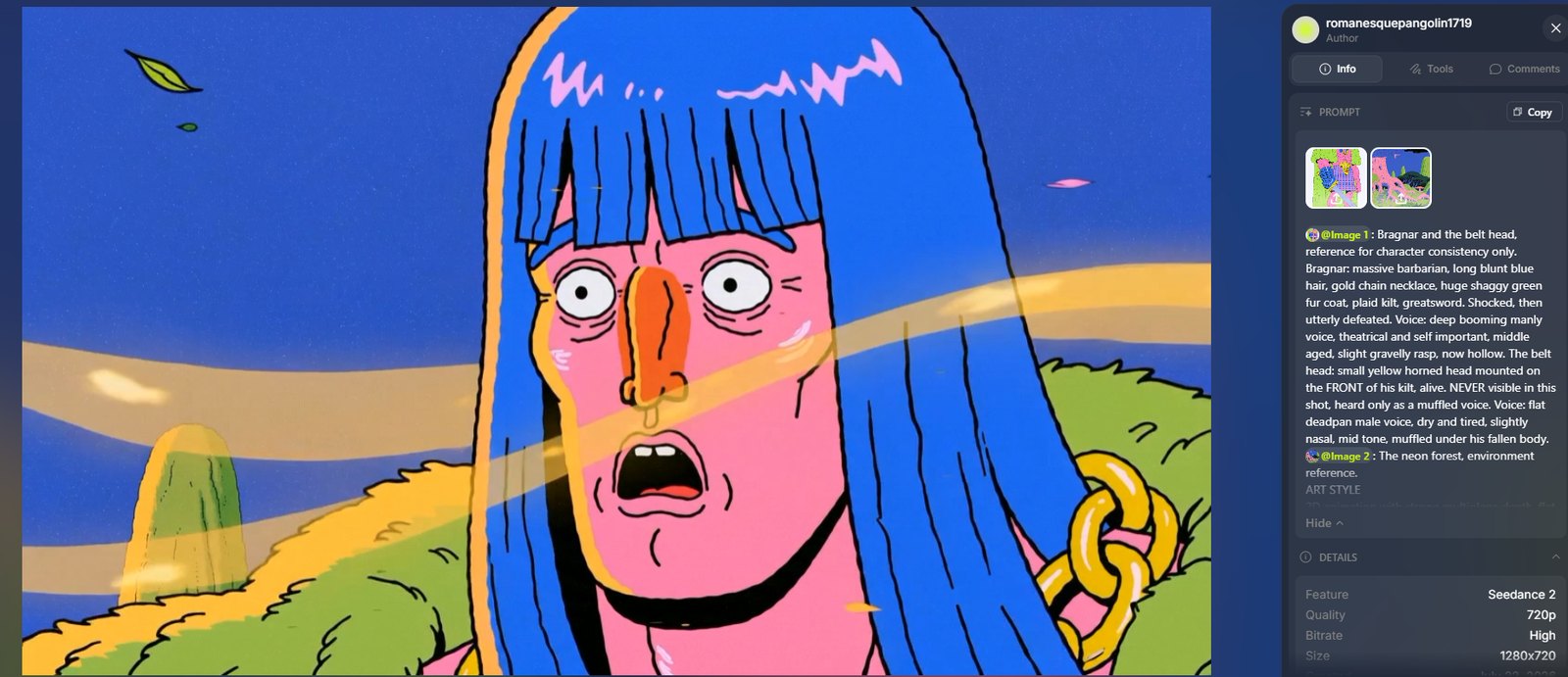
The belt head arrived uninvited and stole the film.
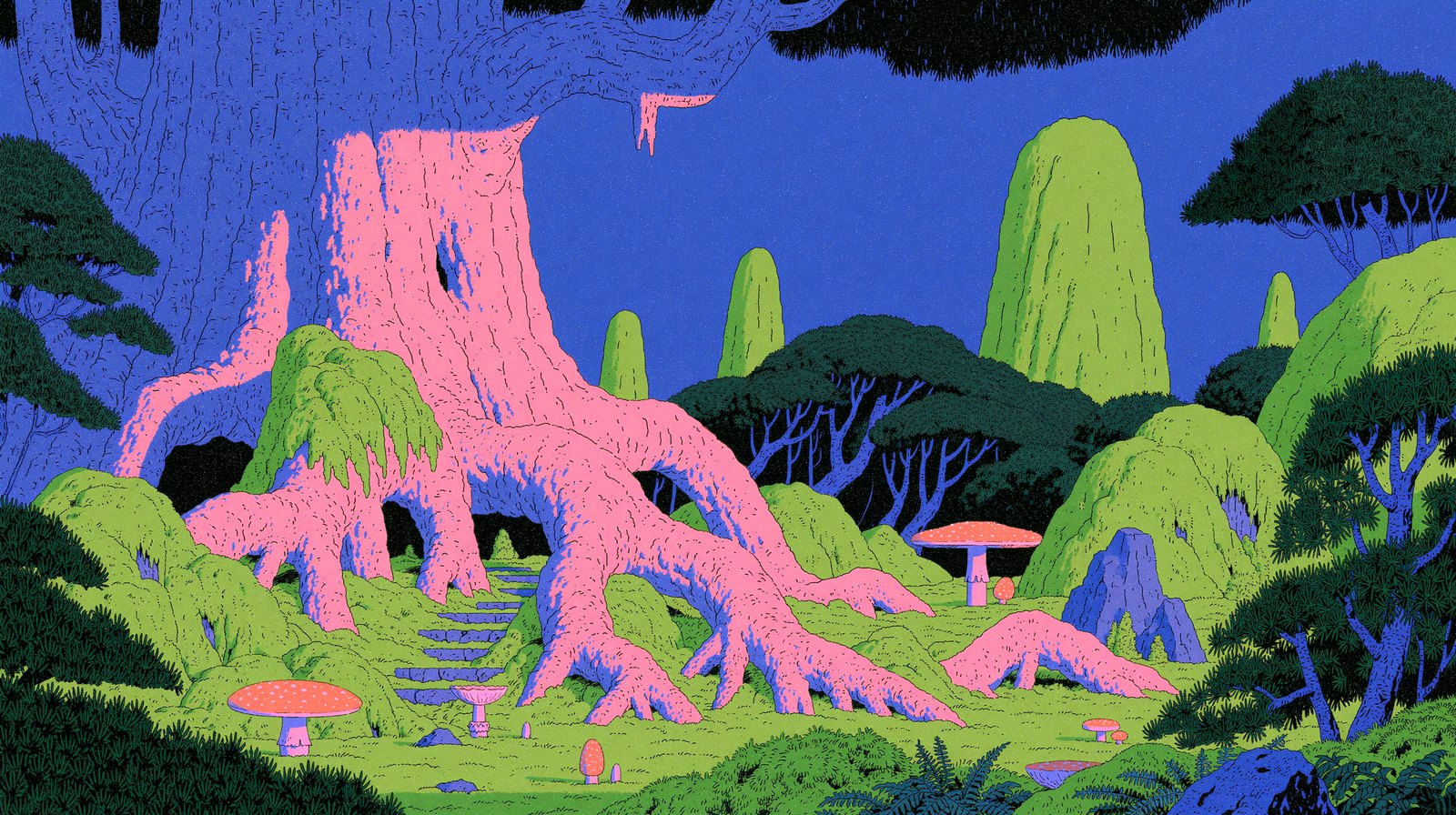
The Neon Forest
One plate carries the whole film.
Eight Seconds, Free
The whole film was shaped by a one day promotion.
Higgsfield ran a free day: Seedance 2.0 at 720p, eight seconds, nothing else. Normal practice here is fifteen seconds at a time.
That ceiling shaped everything. Eight seconds will not hold a single beat, so every prompt carries two or three, and some split one event across two generations built to cut together.
Write the shots
Story order, camera angles and timing planned per beat before any prompt existed.
Build the prompt
A purpose built Seedance skill turns each beat into a structured prompt: art style, environment, context, blocking, shot, lighting, physics, audio.
Generate — Higgsfield
Seedance 2.0, 720p, high bitrate, eight seconds. Multiple runs per beat, references attached every time.
Edit — Premiere
Best takes cut together, sound design, timing tightened. Everything shot and cut in a single day.
The Film, Beat by Beat
Twelve beats in story order — with every iteration, not just the keepers.
The whole film in order. Where a beat was attempted more than once, every attempt is here.
She screams; the thing dragging her could not care less. For the first four seconds the dragger is nothing but a clawed hand at the frame edge, owner off screen.
Hero entrance grammar played straight so the joke can undercut it: boots slam in, whip tilt up the body, sword into the earth. Then the camera drops to kilt level and gets corrected.
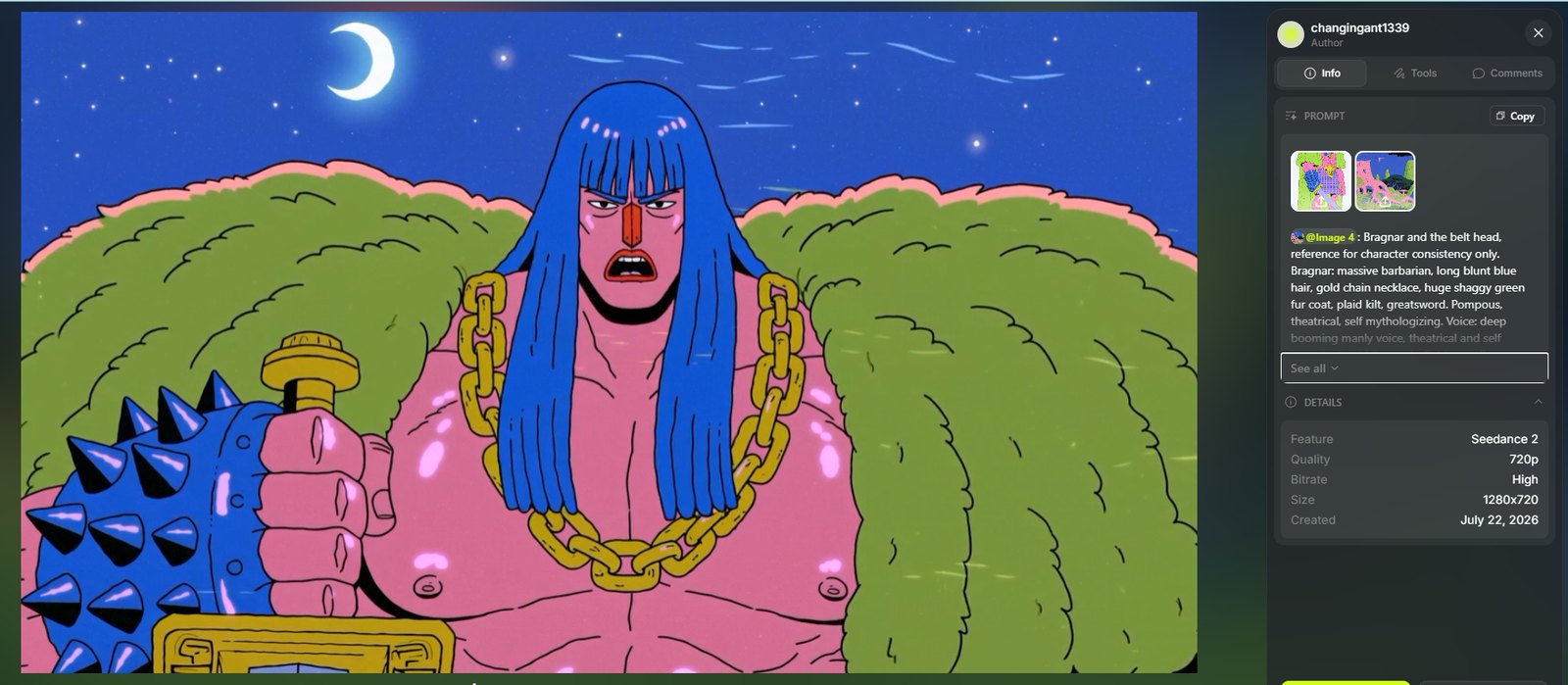
Instead of rescuing anyone, he does a routine. Two versions exist: one played straight into the lens, one to an audience of three who all hate it.
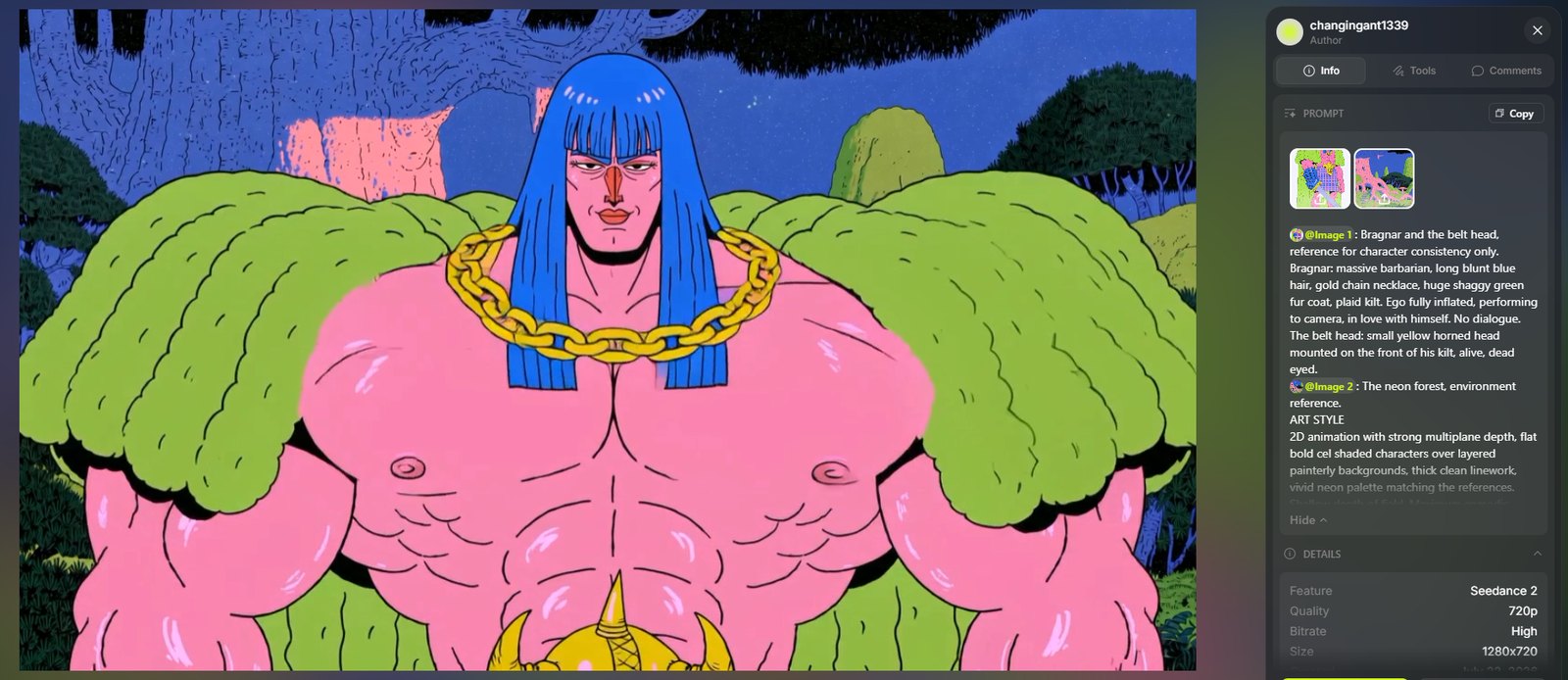
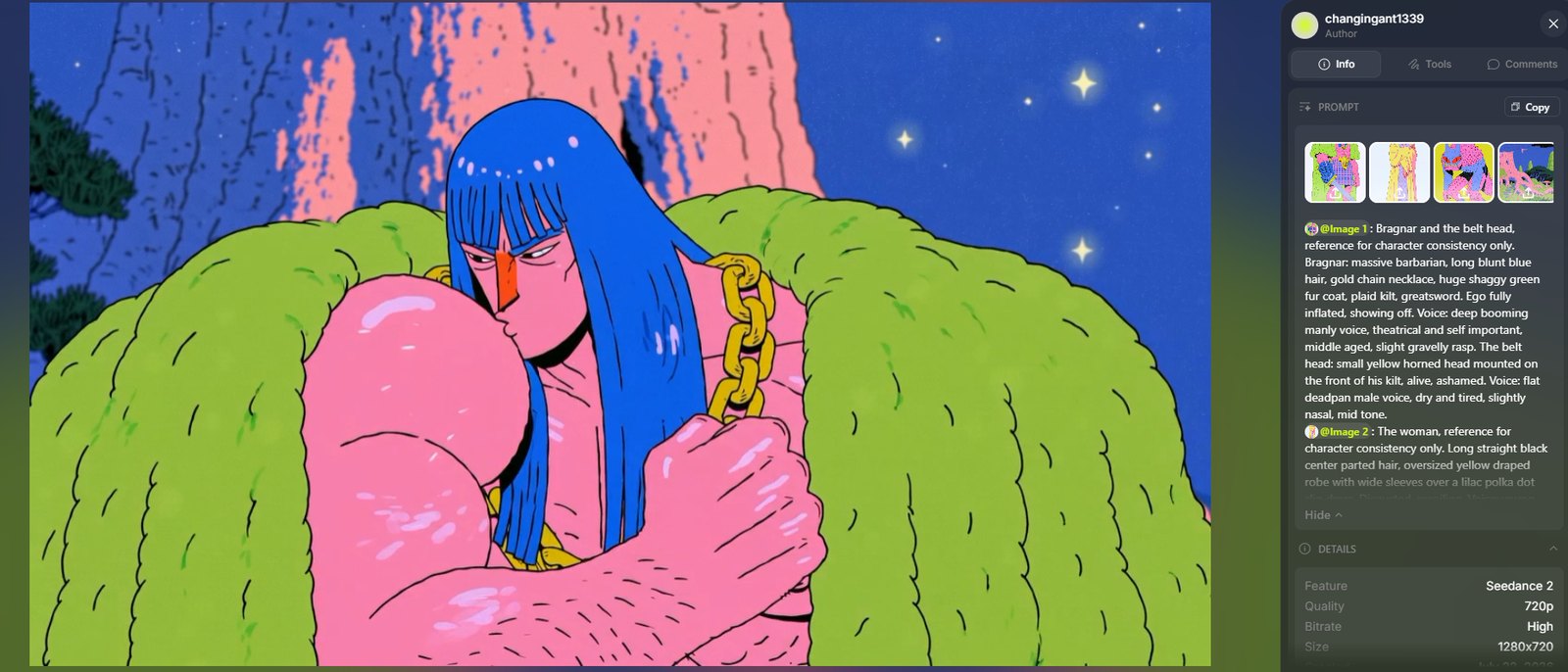
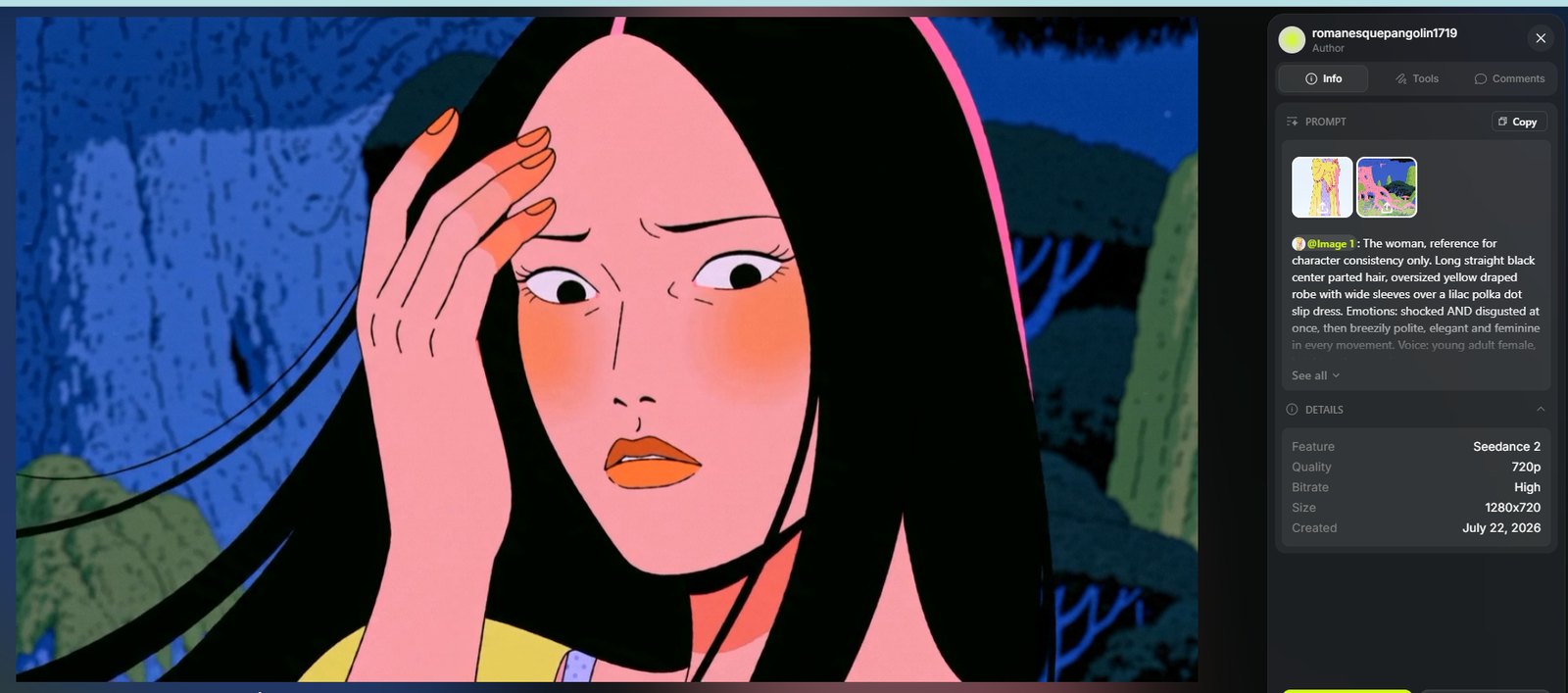
The premise flips. She plays shock and disgust at once, against completely elegant movement, and the joke lands in the gap between her face and her hands.
A tight profile two shot, faces inches apart. The roar cuts off and the shot holds on silence before he speaks. The pause is written as carefully as the noise.
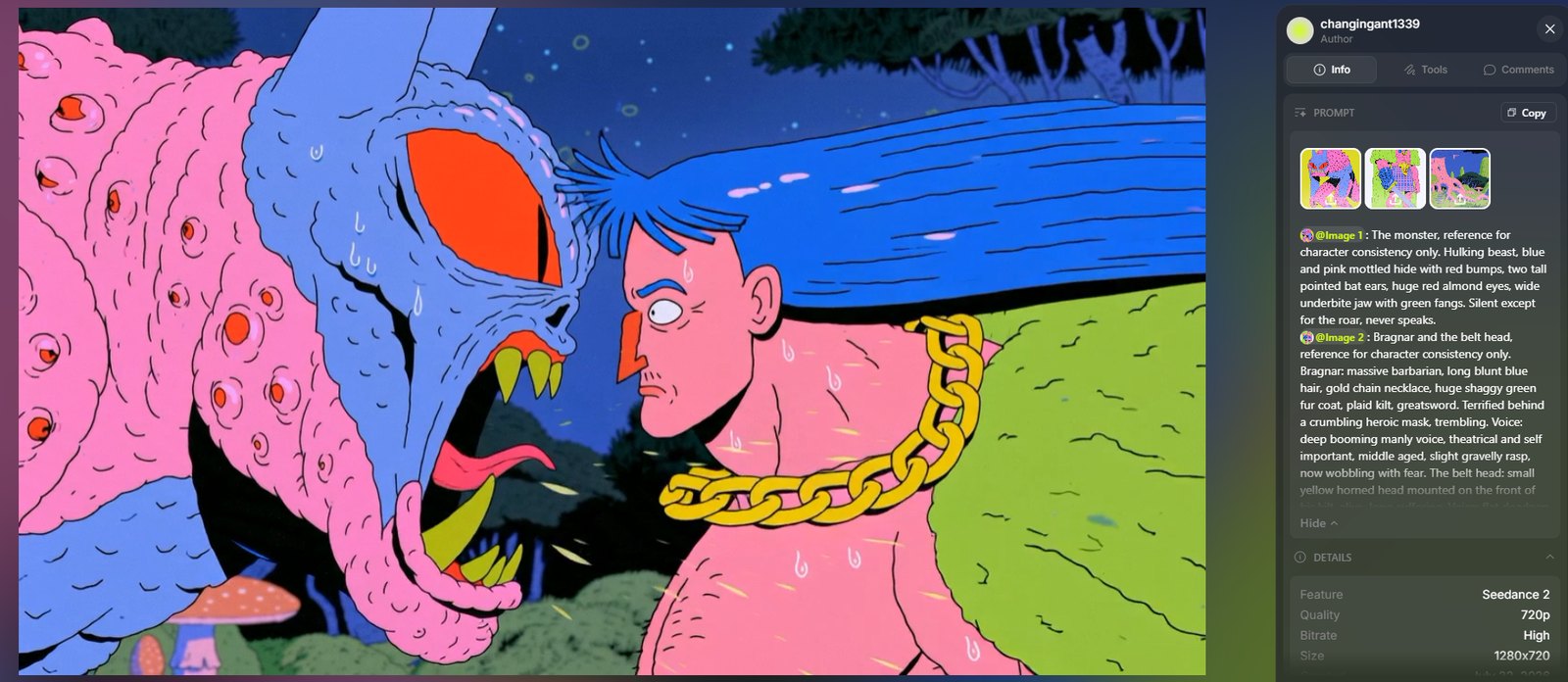
He demands the disguise drop. The camera rides his pointing arm like a rail, across the gap, onto the monster's face: two characters, two beats, one move, no cut.
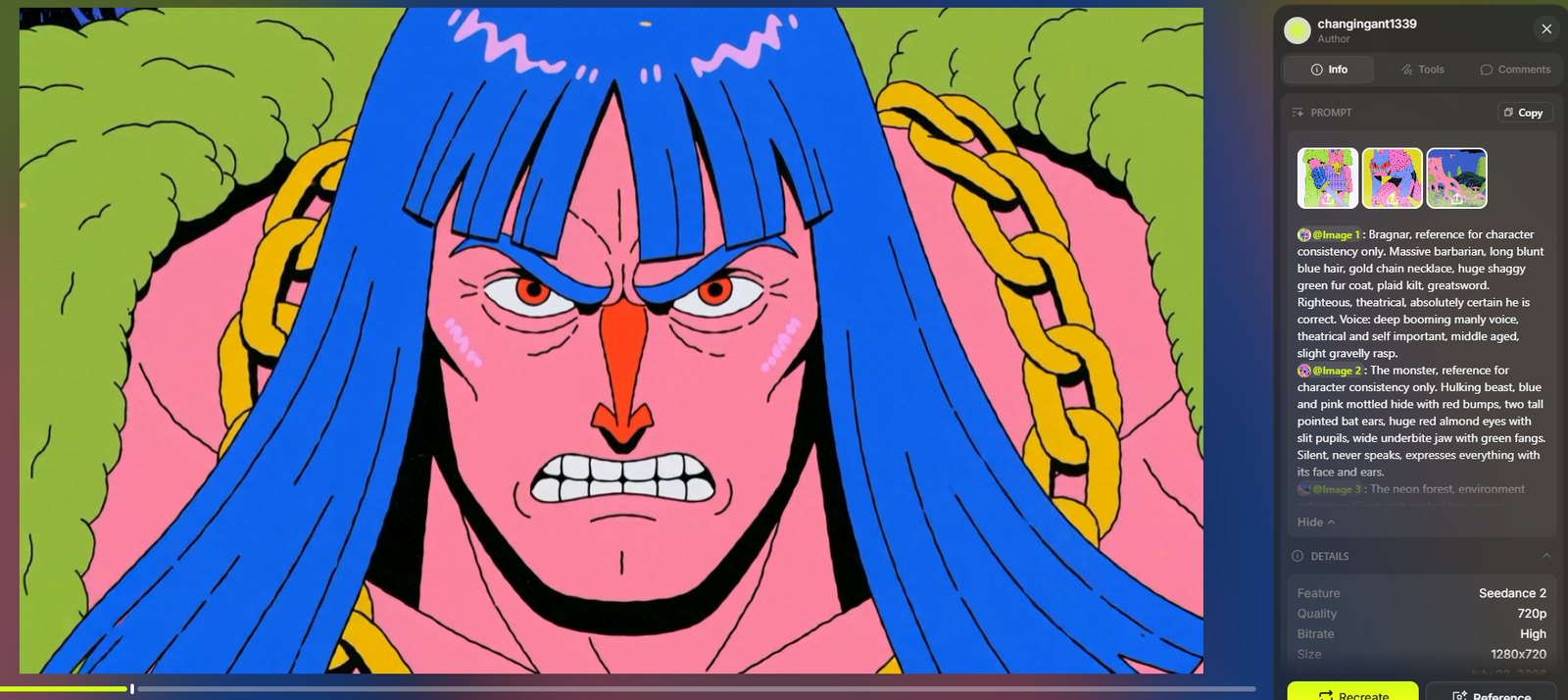
Both references are declared the same character, before and after. That one sentence is what stops the change reading as a cut between two unrelated designs.
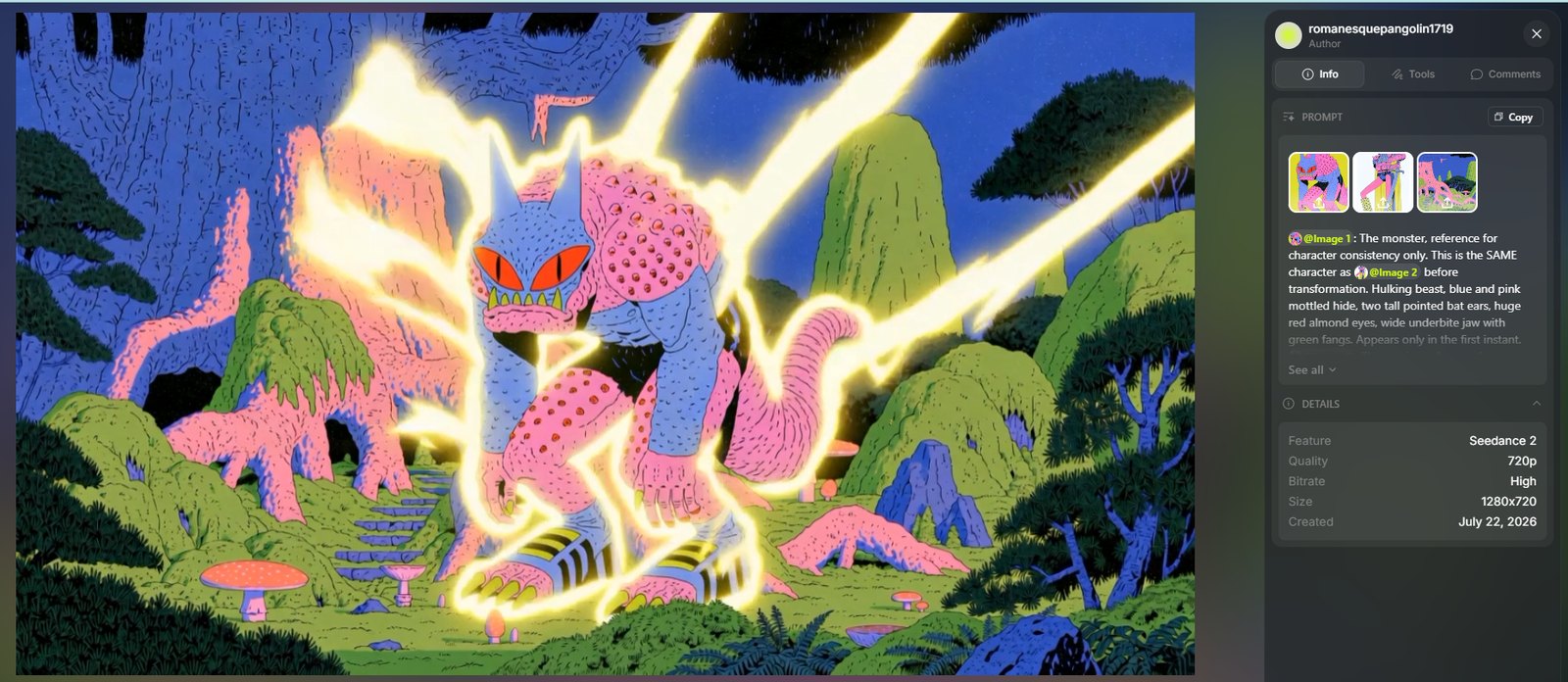
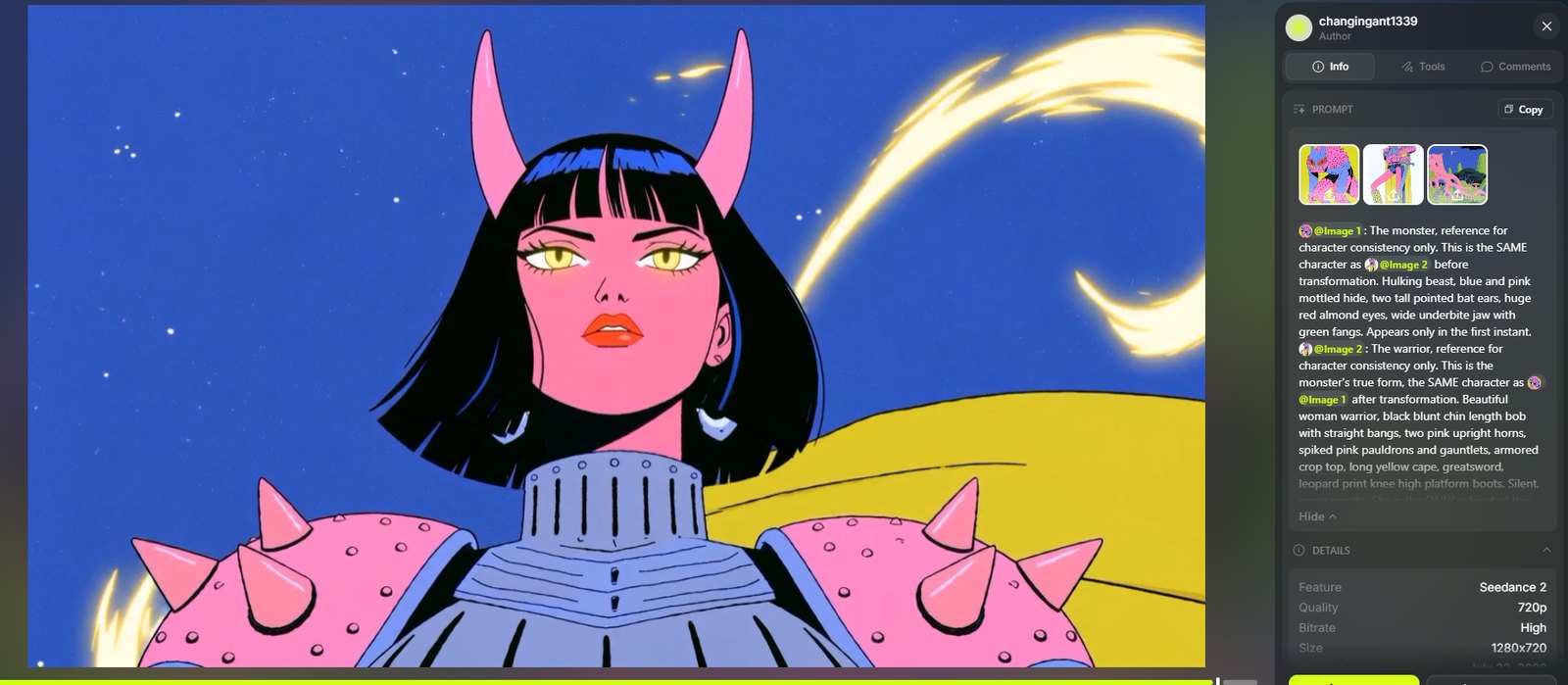
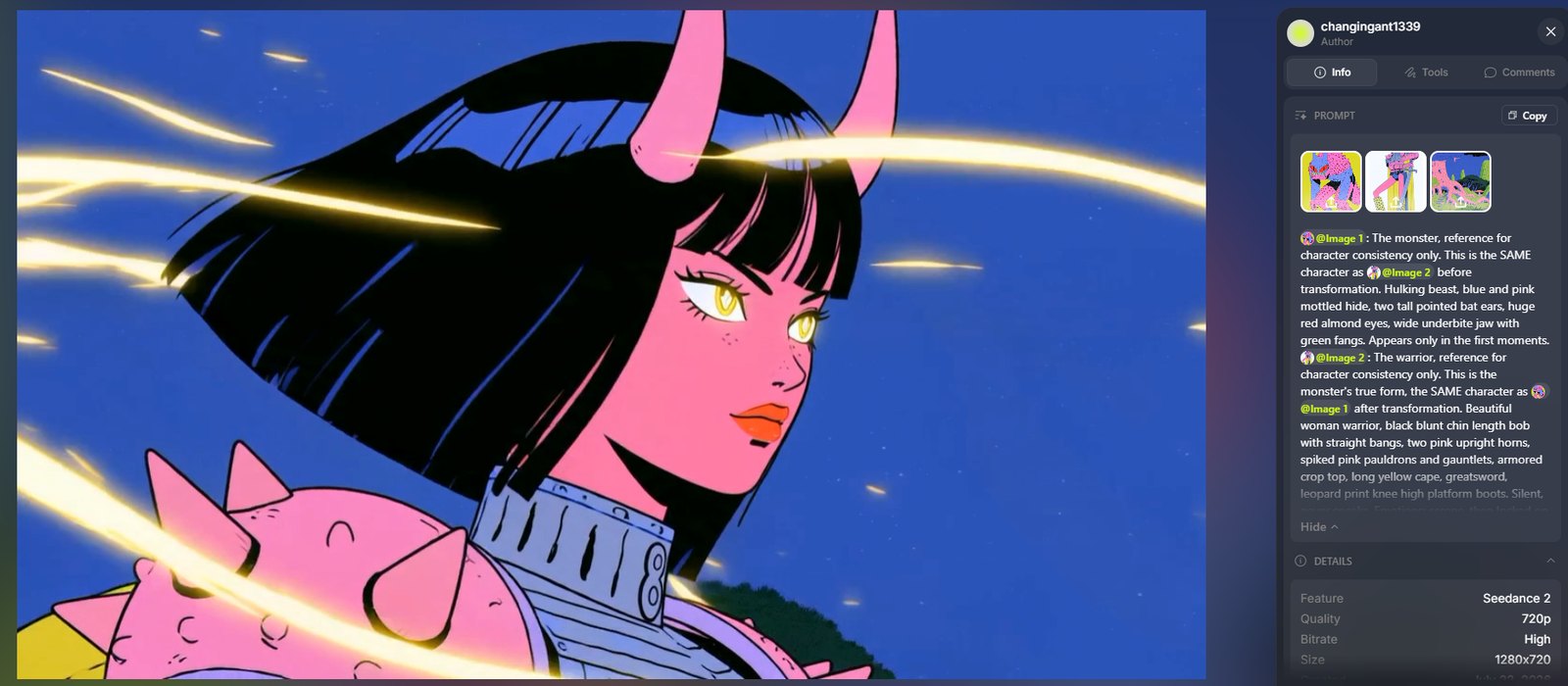
The reverse angle. This one never shows the transformation at all, just three faces hit by golden light from off frame left, one at a time.
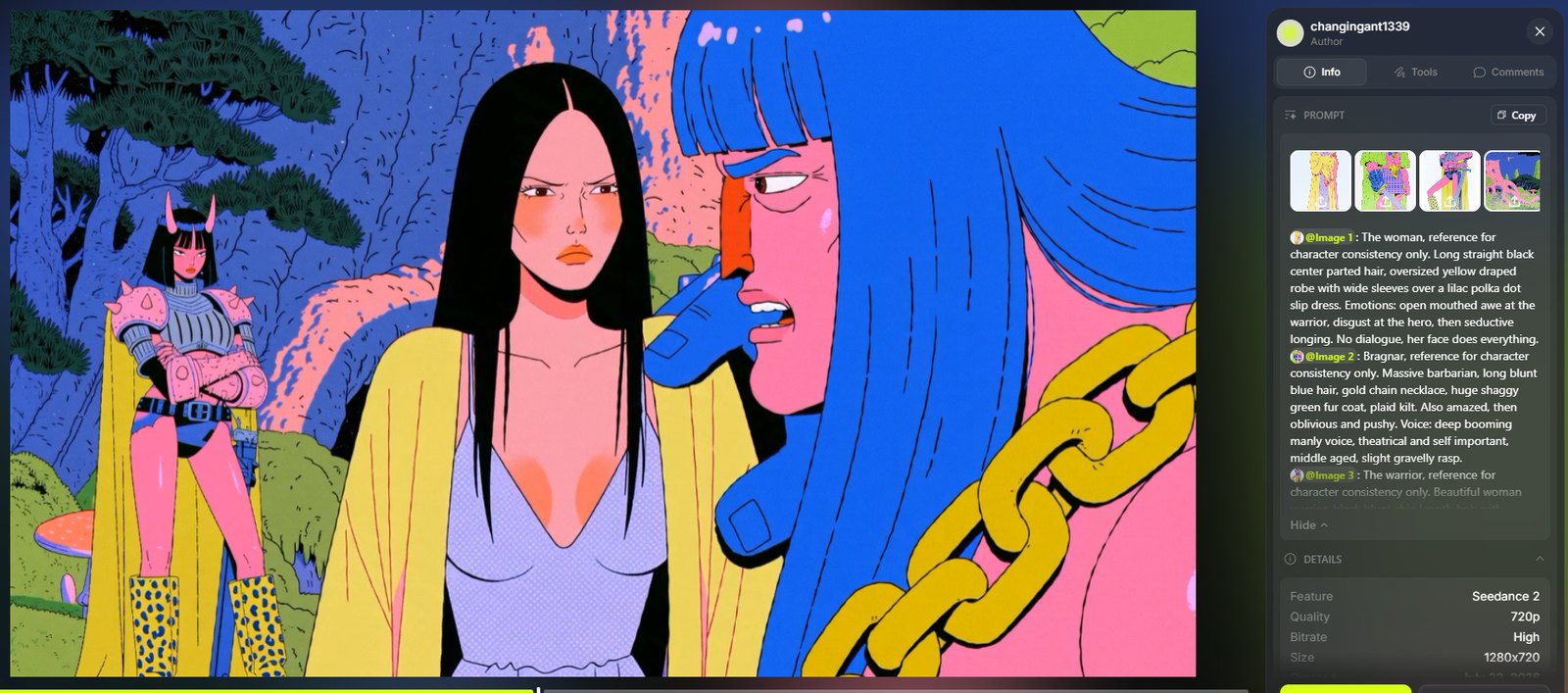
Three characters staged across one frame, and a full arc on a single face: awe, a slow look down at his hand, disgust, then longing as she walks away from him.
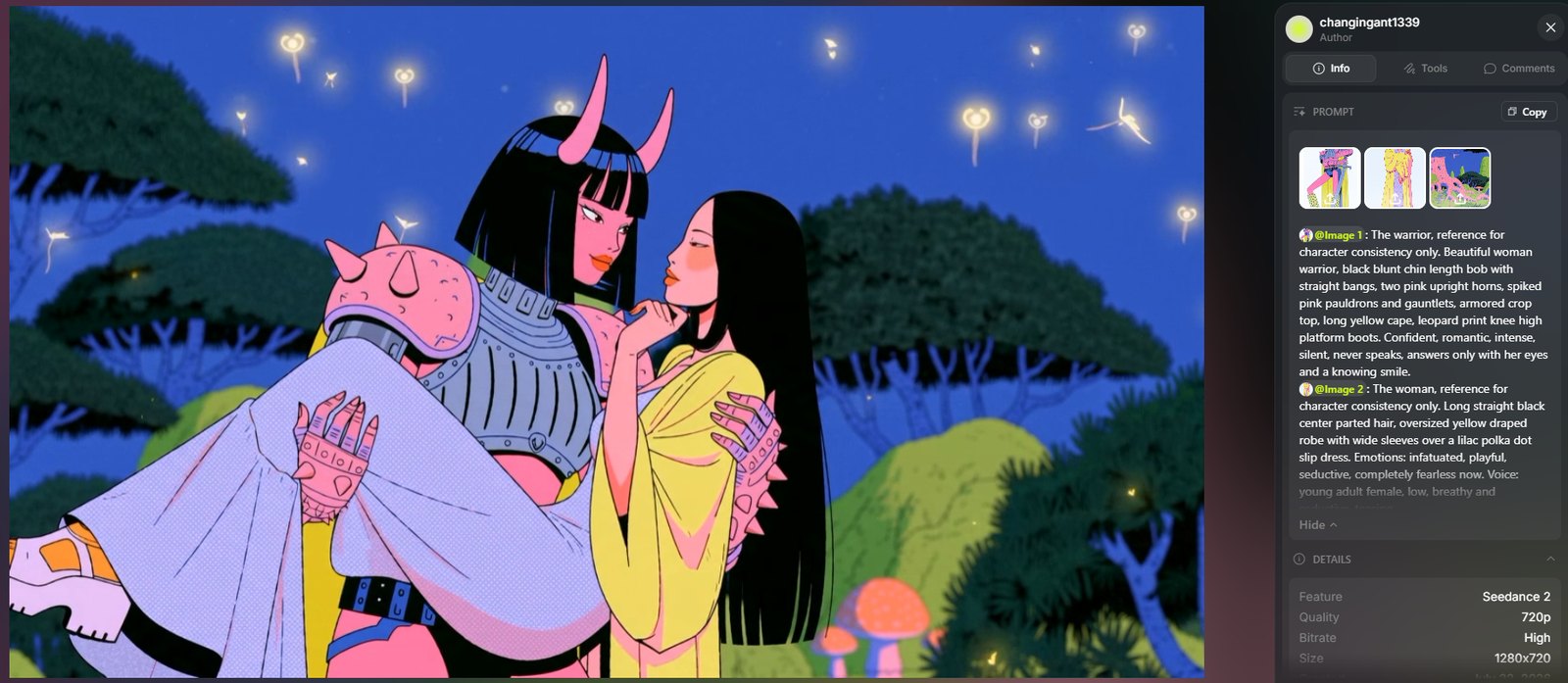
Eleven beats in eight seconds, and the line is a callback. The thing she was screaming about in shot one has become the flirt.
One continuous clockwise orbit, held tight on two faces, never wider. One direction, one speed, one distance, and five separate refusals.
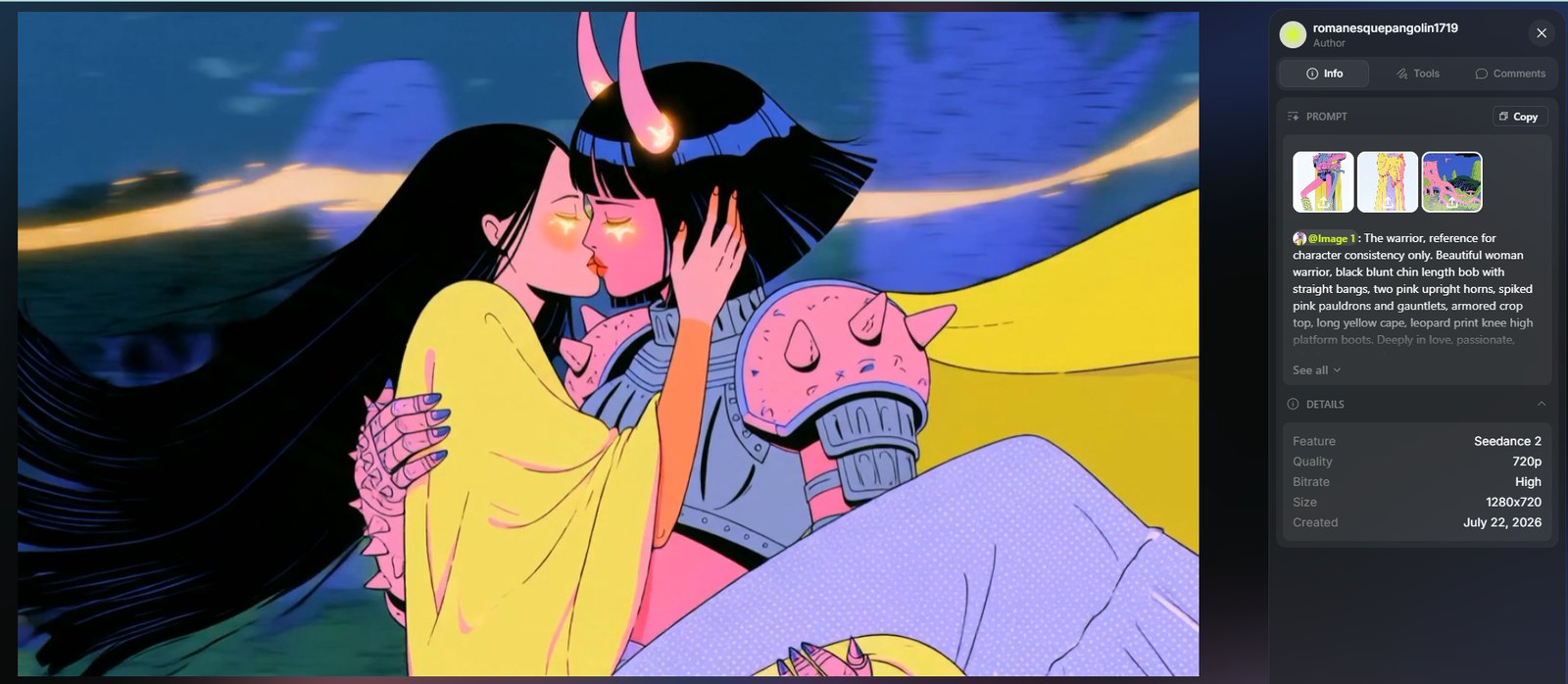
The hardest shot in the film: two characters live inside one reference image, and Seedance kept losing track of which one was speaking.
What We'd Tell You
- Work backwards when it helps. A character you already believe in will tell you what the story is.
- Keep Midjourney prompts short: format, identity, wardrobe, backdrop. The style codes do the rest.
- Declare both references as the same character, and name one anatomical change so a morph reads as one body.
- Give silent characters choreography. Ear up, ear down, slow eye roll.
- Protect skin tones: neutral key on faces, blue confined to the background and a rim on the hair.
- Split one event across two prompts when it will not fit, each excluding what the other contains.
- Reroll before you rewrite. The same prompt twice can miss, then land exactly as written.
Made in a day, on free credits, in eight second pieces. If you build something like this, we would love to see it.